
Roed to Become Southeast Asia`s Next Success Story
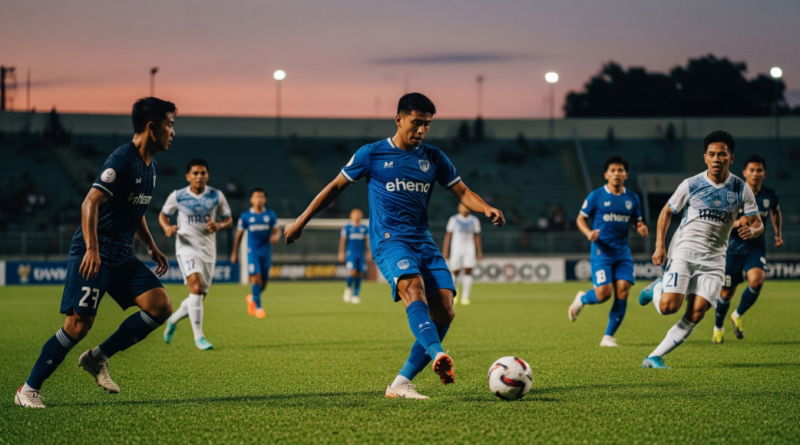
Jakarta, INDONEWS.ID - The investment case for the Philippine Football League improved in 2025/26, but it is not yet bankable on sporting momentum alone. Eleven clubs supported roughly 275 registered players, Manila Digger won its first title in a race decided by two points, and Philippine teams gained more meaningful continental exposure. Those are product signals: deeper employment, competitive tension and inventory that can be sold.
The liabilities remain structural. Club identities have changed, teams have withdrawn, centralized venues weaken local attachment, and match revenue is thin. The PFL can become a credible Southeast Asian growth story if it converts competitive improvement into repeatable home dates, audited club stability and media rights that sponsors can value. Without those operating controls, expansion merely increases payroll and travel costs.
The 2025/26 Season Produced Investable Proof
Manila Digger finished with 60 points from 25 matches, two ahead of One Taguig and 12 above Kaya-Iloilo. A 1–1 final-day draw secured the championship, giving the league a new winner rather than another automatic title for an established club. Competitive balance is commercial inventory: late-season matches retain meaning, improve broadcast scheduling and keep sponsor exposure alive.
Continental results added credibility. Manila Digger became the first Philippine club to reach an AFC Challenge League semifinal, while Kaya competed in AFC Champions League Two. Yet Digger’s home quarterfinal first leg against Dewa United drew a reported 1,400 supporters, a useful reality check: continental progress is not automatically converted into ticketing, hospitality or merchandise demand.
The Revenue Stack Is Too Dependent on Owners
A sustainable football league in the Philippines cannot rely on one patron per badge. Clubs need a mix of central sponsorship, local commercial partners, match-day income, academy fees, merchandise and player trading. Broadcast reach matters, but free streaming without reliable audience reporting gives sponsors visibility without a defensible price.
The operating priority is predictable inventory. Each club should publish a season-long home schedule, use a recognizable venue and report attendance consistently. A supporter who cannot plan the next visit is hard to convert into a season-ticket holder; a brand that cannot compare viewership across matchdays will treat football as experimental spending.
ASEAN’s Leaders Show What Scale Looks Like
Regional comparison should begin with continental placement, not social-media follower counts. Buriram United of Thailand and Johor Darul Ta’zim of Malaysia both reached the 2025/26 AFC Champions League Elite knockout phase, with JDT advancing to the quarterfinals. Singapore’s Tampines Rovers won an AFC Champions League Two group that contained Kaya, which finished without a point.
That gap reflects more than player budgets. Leading ASEAN clubs sell a fixed home, a recognizable match-day experience and recurring continental relevance. Philippine football does not need to imitate every ownership model, but it must offer the same basic certainty: clubs that return next season, venues supporters can identify and technical departments that survive a coaching change.
Betting Data Can Price Attention, Not Fix the Product
Sports wagering can reveal which fixtures attract repeat attention because mature markets respond to team news, injuries and weight of money. For PFL projections, the useful inputs are starting lineups, goalkeeper availability, recent expected-goal patterns and the large quality gap between title contenders and lower-table sides. Odds displayed by betting sites Philippines should be read as changing market estimates rather than forecasts that remove uncertainty. A low-priced favorite can still be poor value if the implied probability exceeds a realistic model.
Esports offers a neighboring sponsorship category with a younger, screen-first audience, but its event economics are not interchangeable with league football. Competition runs can be shorter, distribution is native to streaming platforms and player personalities may carry more value than venue identity. An esports betting site operates around that high-frequency schedule, while the PFL must build weekly appointment viewing across a long season. Cross-promotion only works when the football product has consistent kickoffs and usable audience data.
Casino audiences form another adjacent commercial segment, governed by different mechanics and compliance demands. Slot sessions are built around RNG outcomes, declared RTP, volatility and stake limits rather than teams or live form. Any partnership involving an online casino Philippines needs age-gated media placement, clear category rights and separation between football performance claims and casino probability. Sponsorship money should not blur the distinction between a club projection and a game of chance.
A Five-Line Scorecard Should Govern Expansion
The PFL’s next growth phase should be measured against operating evidence, not the number of announced clubs.
- Club continuity: every entrant must show funded payroll, travel and venue commitments for the entire season.
- Home-market conversion: report paid attendance, repeat buyers and local sponsor renewals by club.
- Media value: publish verified live and replay audiences, watch time and geographic reach.
- Player development: track minutes for eligible local players, academy graduates and transfers to stronger leagues.
- Competitive credibility: reduce extreme scorelines while protecting continental qualification standards.
The 2025/26 table showed a viable core: 11 clubs, a two-point title race and a first-time champion. The next capital should go toward ticketing systems, venue agreements, content production and club licensing rather than another expansion headline. If those five indicators improve across two consecutive seasons, football development in the Philippines gains an investable record instead of another promising restart.